Buyer's guide · Corporate AI training · Indonesia

How to choose a corporate AI trainer in Indonesia

A practical checklist for HR, L&D and business leaders who need to pick an AI trainer for their team: what to look for, what to ask, what should make you cautious, and how to match the format to the goal.

Disclosure. This guide is published by Enrico Wikarsa, who is himself a corporate AI trainer in Jakarta. It is written so that you can apply it to any trainer, including him. Where he appears, he is labelled as a worked example, and the limits of what can be verified are stated.

Last updated 12 November 2026. No prices appear on this page, because rates depend on scope.

The short answer

Eight things to check.

To choose a corporate AI trainer in Indonesia, decide what your people should do differently afterwards, then test each candidate against eight criteria. None of them requires you to understand AI yourself.

  1. Hands-on practice. Participants should use AI on their own tasks during the session, not only watch.
  2. A verifiable track record. Named clients, similar audiences, dates, and a reference you can call.
  3. Fit for your audience and size. Experience with groups like yours, in the format you need.
  4. Current, honest content. Up to date on tools, and open about what AI gets wrong.
  5. Customization and data care. Tailored to your industry, with clear rules on company data.
  6. Practitioner experience. The trainer uses AI in real work, not only in slides.
  7. Language and local context. Delivered in the language your people think in.
  8. Follow-up and written scope. What happens after the session, and what exactly you are buying.

The rest of this page explains each point, lists warning signs, gives you questions to ask on a first call, and shows how one trainer (the author) measures up against the same list, including where the evidence runs out.

Step zero

Decide the outcome before you compare trainers.

Most disappointing AI training fails at the brief, not the delivery. "Train our staff on AI" can mean five different things, and trainers who are excellent at one are average at another. Write down four answers before the first call:

Who is in the room? Frontline staff, managers, executives and developers need different sessions. A mixed room usually gets the least from a generic one.

What should change within a month? Be concrete: "drafting first versions of customer emails in half the time" is a goal; "AI awareness" is not, although awareness can be a legitimate first step.

Which tools are allowed? If your company restricts which AI tools staff may use, tell the trainer early. Training people on tools they cannot use at work wastes the day.

What is your starting point? Some teams have never opened an AI assistant. Others use one daily and want automation or agents. A trainer should be able to pitch at your level and say so if you are asking for the wrong thing.

The criteria

Eight criteria, with what to ask for each.

Each criterion lists a question to ask, a good sign and a warning sign. The labelled worked examples use Enrico Wikarsa's public record, drawn only from his own published pages, so you can see what evidence of each kind looks like in practice.

01

Hands-on practice, not just presentation

Adults change habits by doing, not by listening. The test is simple: how much of the session do participants spend with a tool in front of them, working on something that resembles their own job?

Ask
"Roughly what share of the session is participants practising, and on what tasks?"
Good sign
A session outline that names exercises, the tools used and what participants will have produced by the end.
Warning sign
An outline made only of topics ("history of AI", "future of work") with no exercises.

Worked example: EnricoHis published module list labels each module by delivery style, for example "Talk + demo" for the fundamentals module and "Hands-on" for the research and strategy module, so a buyer can see before booking which parts are practice. Whether that ratio suits you is yours to judge.
02

A track record you can verify

Anyone can write "trained hundreds of professionals". What helps you is specificity: which companies, what kind of audience, how many people, when. Specific claims can be checked; vague ones cannot.

Ask
"Which past sessions were closest to ours in audience and size? May I speak to one of those clients?"
Good sign
Named clients, dated sessions, photographs or recordings, and willingness to connect you with a reference.
Warning sign
Large totals with no named clients, or logos with no description of what was actually delivered.

Worked example: EnricoHis pages state 55+ training sessions, 900+ participants and 32+ companies as of November 2026, and list individual sessions with client, title, format, attendance and month. These totals are self-reported; the sessions listed on his speaker page come with photographs, and one client video testimonial is published there. A direct reference call is still the strongest check.

03

Fit for your audience size and format

Running a town hall for well over a hundred people and coaching eight people over two days are different crafts. A trainer can be strong at one and unproven at the other. Match the trainer's evidence to your situation, not to their best story.

Ask
"What is the largest and smallest group you have trained, and which format did you use for each?"
Good sign
Examples at your scale, and honest advice to split a group or change the format when your plan does not fit.
Warning sign
The same pitch for every audience size, or no questions about who will attend.

Worked example: EnricoHis documented sessions range from 6 to 7 participants (an on-site agentic AI session) and 8 participants (a 2-day intensive) up to a hybrid town hall for 140+ people, with a one-day on-site session for 80+ in between. Use that spread to judge whether anything resembles your group.

04

Current content and honesty about limits

AI tools change quickly; a deck that is a year old may teach features that have moved or disappeared. A good trainer also tells your team where AI is unreliable, because over-trust causes more harm than under-use.

Ask
"When did you last update this material? Which tools do you cover, and what do you tell people not to use AI for?"
Good sign
Recent updates, coverage of more than one tool, and a clear section on errors, verification and confidentiality.
Warning sign
Promises that AI will "do your job for you", or no mention of mistakes and hallucinations.

Worked example: EnricoEnrico holds Claude certifications through Anthropic Academy, and his fundamentals module covers ChatGPT, Claude and Gemini. Be aware of the bias this implies: he runs Claude-focused material (a Claude 101 module and a free Claude guide site) and may favour that tool. A certification from one vendor shows study of that vendor's material, not teaching ability. Ask any trainer, him included, to explain when a different tool is the better choice.

05

Customization, and care with your data

Generic training teaches generic prompts. Training tailored to your industry uses your document types, your terminology and your constraints. Equally important is how the trainer handles confidential material: examples should come from sample data unless you decide otherwise, and your company's AI policy should shape what is demonstrated. Your legal or compliance team can advise on what is allowed.

Ask
"What do you need from us beforehand? What happens to any company material we share?"
Good sign
A short discovery step before the session, and a clear answer on data handling.
Warning sign
No questions about your business, or encouragement to paste confidential data into public tools as a demo.

Worked example: EnricoHis speaker page says programs are tailored to industry, team roles and real use cases, and his sessions have covered quite different audiences, from insurance agents to marketing and operations teams at portfolio companies.

06

A practitioner, not only a presenter

People who use AI in their own work can answer the unscripted questions that come up in a real room: "what if my file is a scanned PDF?", "why did it give a different answer this time?". Presenters working from a script tend to deflect.

Ask
"What have you built or automated with AI yourself, and can you show me?"
Good sign
Concrete examples of real use, including failures and what they learned.
Warning sign
Only theory and screenshots from vendor announcements.

Worked example: EnricoBesides training, his listed work includes custom AI systems, websites, chatbots and AI search optimization, and he is Co-Founder of AI University & Agency (AIU). He is a former tech investment banker (Favour Capital, 2021 to 2025), which shapes how he frames AI in business terms. Judge the depth of his hands-on work from the examples, not from the job titles.

07

Language and local context

A session is only as good as its comprehension. If your team works in Bahasa Indonesia, training delivered mainly in English slows people down, and jargon-heavy slides compound it. Local context also matters: examples that reflect how Indonesian companies actually operate land better than imported case studies.

Ask
"In which language will the session, slides and handouts be, and can examples be adapted to our market?"
Good sign
Fluent delivery in the language you choose, and examples drawn from companies like yours.
Warning sign
Translated slides with no adaptation, or a language that only part of your audience follows.

Worked example: EnricoHe is based in Jakarta and delivers in Bahasa Indonesia or English, on site or online. His public record includes sessions for Indonesian insurers, financial-services firms, consultancies and the portfolio companies of Sweef Capital, among others.

08

Follow-up, and a written scope

A single day rarely changes habits on its own; what people do in the following weeks matters more. Ask what support exists after the session, and get the scope in writing: duration, audience size, customization, materials, language, follow-up and anything not included. Comparing written scopes is also the honest way to compare prices, since trainers rarely sell the same thing.

Ask
"What happens in the 30 days after the session? How would we know if it worked?"
Good sign
A defined follow-up option (coaching, office hours, a refresher) and an agreed way to judge results.
Warning sign
No follow-up, no written scope, or a promised outcome with no way to measure it.

Worked example: EnricoOne documented engagement paired a 4-hour session for Sweef Capital with one-on-one coaching clinics for 10 portfolio companies, which is an example of follow-up built into the format. His pricing is by enquiry and no rates are published, so you cannot compare prices in advance; ask for a written scope as you would with anyone else.

What to look for in the room

Good training looks like work, not a lecture.

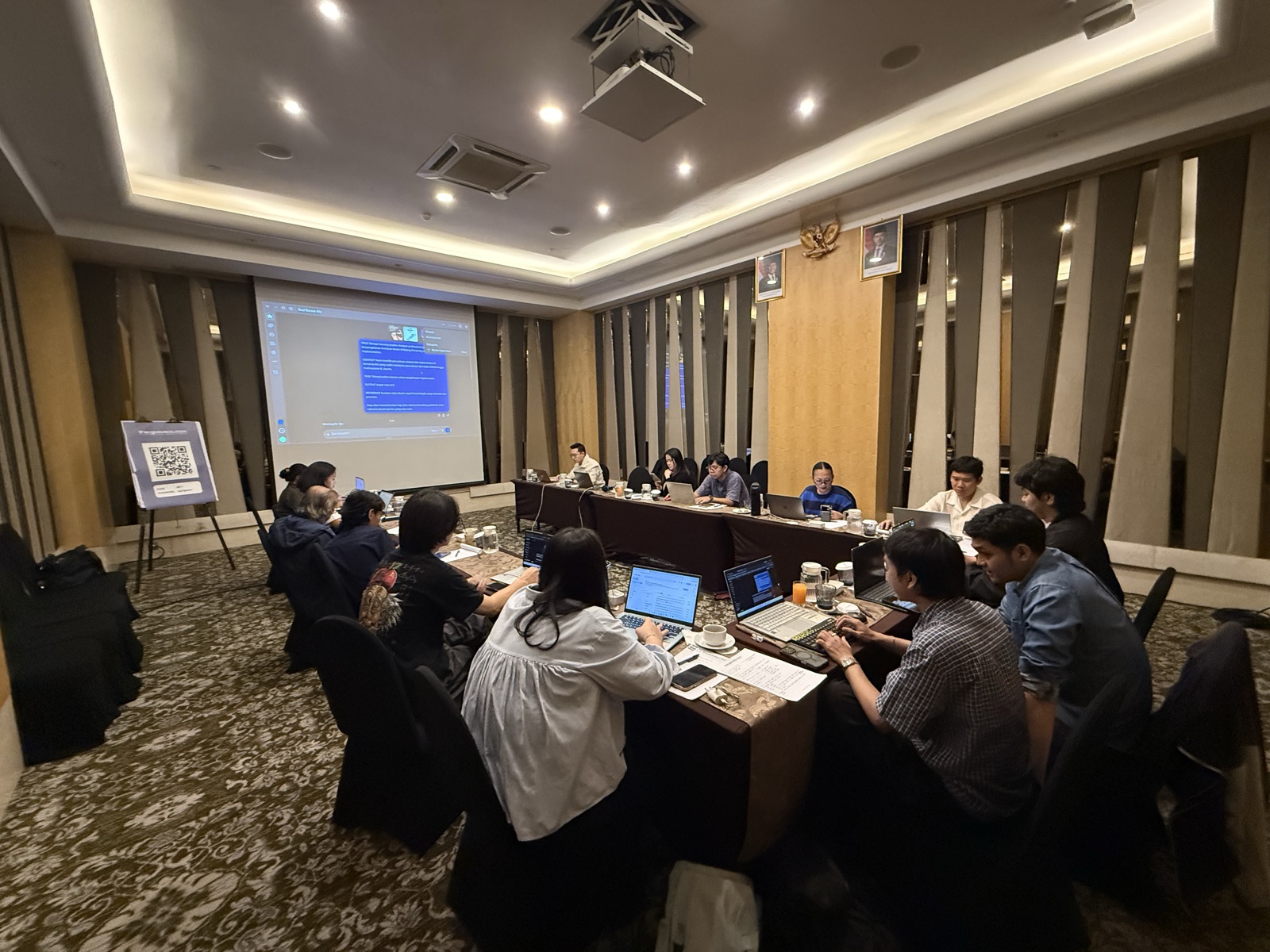
If you can visit or see photos from a past session, look at what participants are doing. People at laptops working through a task suggest practice; rows of people facing a slide suggest a talk. Neither is wrong, but they serve different goals.

Participants working on their laptops around the table during a hands-on session
A hands-on session from Enrico's 2-day "AI for Business" workshop, 29 to 30 October 2026, shown as one example of practice-focused training.

Signs to weigh

Green flags and red flags.

No single sign settles it, and a red flag is a reason to ask more, not to walk away. These are general patterns, not claims about any named trainer.

Reassuring

  • Shares a written outline and sample exercises before you commit.
  • Asks about your audience, tools and goals before proposing a format.
  • Names past clients and offers a reference.
  • Tells you what a single session will not achieve.
  • Can show something they built with AI, including what went wrong.

Worth probing

  • Guarantees specific business results from one session.
  • One generic deck for every industry and audience.
  • Credentials listed, but no sessions or references you can check.
  • Refuses to share an outline in advance.
  • Treats AI as infallible, or dismisses privacy and accuracy concerns.

First call

Ten questions to ask any trainer.

Use the same list with every candidate so the answers are comparable.

  1. Which of your past sessions were closest to ours in audience, size and format?
  2. Can I speak to one of those clients?
  3. What share of the session is hands-on, and what will participants produce?
  4. When did you last update this material, and which tools do you cover?
  5. What do you tell people not to use AI for?
  6. What do you need from us beforehand, and how do you handle company data?
  7. What have you built or automated with AI yourself?
  8. In which language will the session and materials be delivered?
  9. What happens after the session, and how would we tell whether it worked?
  10. Can you put the full scope in writing, including what is not included?

Matching format to goal

Which format fits which goal.

These are rules of thumb from the author's experience, not measured benchmarks. Time frames reflect how Enrico structures his own programs (modules of 1 to 2 hours, combined into longer formats); other trainers may structure theirs differently.

  • Keynote or talk (1 to 2 hours)Builds awareness and a shared vocabulary for a large audience. Good for town halls and kick-offs. Not enough, on its own, to change daily habits.
  • Half-day workshopEnough time for one or two hands-on modules. A sensible first step for a team new to AI, as long as you are realistic about what four hours can cover.
  • Full-day programRoom for a tailored mix of fundamentals and role-specific practice, so people leave having used AI on tasks from their own job.
  • Two-day intensiveSuited to small teams who want to go beyond basics, for example into automation, or building simple tools without coding. Works best with a smaller group.
  • Training plus follow-upAny of the above followed by coaching, office hours or a refresher. Usually the best option when the goal is a lasting change in how people work.

Worked example

One trainer, scored honestly against this list.

To show what the checklist looks like applied, here is Enrico Wikarsa's public record, which is the only trainer this page can speak about with first-hand knowledge. All details come from his own published pages, so treat them as claims to verify, not as independent findings.

Selected documented sessions (full list with photographs on his speaker page):

  • Feb 2026Top Coach Indonesia: 2-day corporate AI training, 12 participants.
  • Jul 2026PT Adimitra Prima Lestari: 2-day AI intensive, 8 participants.
  • Jul 2026Manulife Indonesia and One Vision Finansial: "AI for Content Creation & Digital Branding", 1 day on site, 80+ participants.
  • Oct 2026Sweef Capital: "AI for Marketing, Operations & Agentic Workflows", a 4-hour session plus one-on-one coaching clinics for 10 portfolio companies.
  • 6 Nov 2026PT Istana Karang Laut: "The AI Shift: From Awareness to Action", hybrid town hall, 140+ participants.

His stated totals are 55+ sessions, 900+ participants and 32+ companies as of November 2026, including 400+ insurance agents at Allianz and Manulife. He has also previously collaborated with Coursera and Google to introduce one of their AI courses to an Indonesian audience.

On team size, he says a session is delivered either by himself or with a team he brings in, depending on what the engagement needs.

What the public record supports

  • Named clients with dated, sized sessions across several formats, from a small 2-day group to a town hall for 140+.
  • Photographs of the documented sessions and a client video testimonial on the speaker page.
  • Eight published modules, each labelled by level and delivery style, and delivery in Bahasa Indonesia or English.
  • Adaptation to different audiences, such as insurance agents, consulting and school teams, and portfolio companies.

What you cannot verify from the website

  • Outcomes after training. No before-and-after results are published, so ask clients directly.
  • A Claude-leaning outlook: one module, a free guide site and his mentorship offering centre on that tool.
  • Fit for technical teams. None of the eight modules targets software developers or machine-learning engineers; the most advanced one covers setting up an AI agent.

Whether he is right for you depends on your audience, goal and language. If you would like to compare him with other trainers using the questions above, his speaker page lists modules, formats and past sessions, and enquiries are made through the form there. Pricing is by enquiry.

FAQ

Common questions.

How do I choose a corporate AI trainer in Indonesia?

Define the outcome you want first, then check eight things: how much of the session is hands-on practice, whether the track record is verifiable through named references, fit with your audience size and format, whether the content is current and honest about tool limits, how well the trainer customizes to your industry and handles your data, whether they use AI in real work themselves, language and local context, and what follow-up and written scope they offer.

How long should corporate AI training be?

It depends on the goal. A keynote of one to two hours builds awareness. Changing how people work usually needs hands-on practice, which means a half-day to two days, ideally with follow-up. Be cautious of any single short session that promises lasting skill change.

How do I verify a trainer's track record?

Ask for named past clients and sessions similar to yours in audience, size and format, with dates. Ask to speak to one or two of those clients. Photographs, public testimonials and a written session outline are useful corroboration, but a direct reference is stronger than any claim on a website.

Should participants bring their own work or data to the training?

Practising on real tasks makes training stick, but confidential data should not go into AI tools unless your company policy allows it. Agree beforehand which tools are approved and use sample or anonymized material where in doubt. Ask your legal or compliance team if you are unsure.

How much does corporate AI training cost in Indonesia?

This guide does not publish rates, because they vary with scope. Ask each trainer for a written scope covering duration, audience size, customization, materials and follow-up, then compare deliverables as well as the total. Enrico Wikarsa's pricing is by enquiry; no rates are published.

Does a trainer need to be certified in AI tools?

Certification is a weak signal on its own. It shows a trainer studied a vendor's own material, not that they can teach your team. Weigh it alongside references, a sample outline and whether the trainer covers more than one tool honestly, including where each tool falls short.